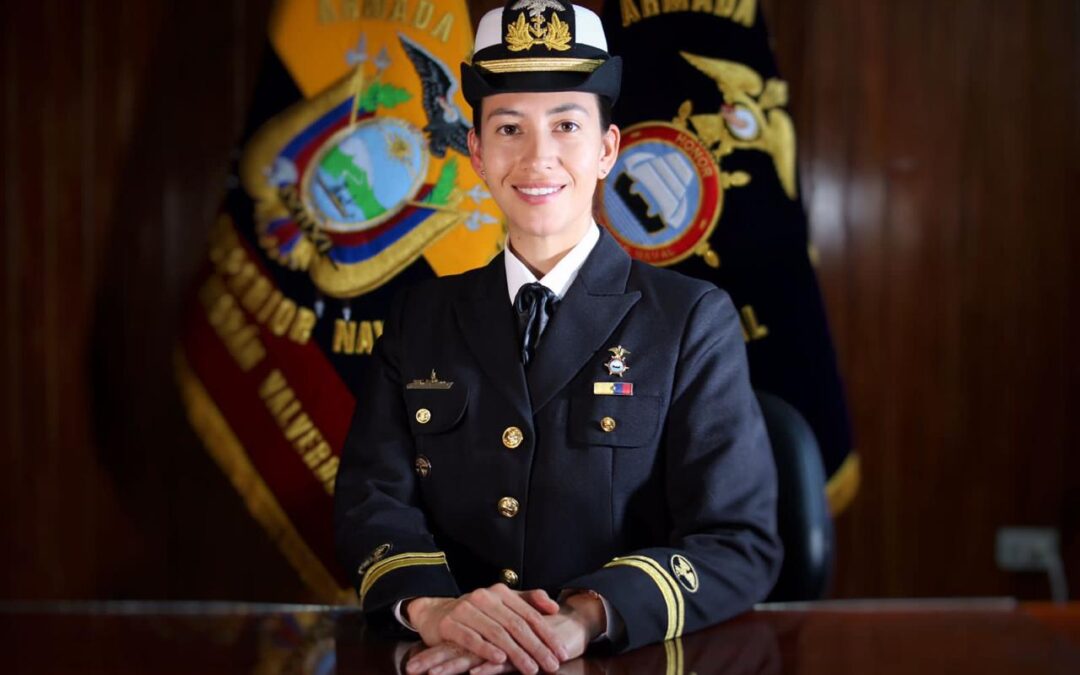
For International Women’s Day, we asked women across the maritime sector three questions about their careers, progress in the industry, and what still needs to change. This is what Sharloth said.
What do you enjoy most about working in the maritime domain as a woman?
What I enjoy most is the opportunity to contribute to a field that is key to national development and the protection of the marine environment. The maritime sector integrates science, security, trade, and sustainability, and being part of that intersection is both deeply challenging and rewarding.
Being the first female hydrographer in Ecuador allowed me to demonstrate that technical preparation and professionalism have no gender. Working at sea and in traditionally male-dominated environments has been an experience that demands discipline, character, and resilience, but it also opens space to transform long-standing paradigms.
Today, it is very satisfying to see more and more women joining the field of hydrography. Seeing new generations of female hydrographers embarking on voyages, collecting data, participating in hydrographic surveys, and contributing their technical knowledge to the development of the country is a clear sign that paths which once seemed difficult are now opening for many more.
Contributing to maritime governance and to decision-making within the Maritime Authority is an honour that I assume with commitment and responsibility.
What progress have you seen for women in the sector?
In recent years, I have observed significant progress: women are not only present in the maritime sector, but they are also occupying technical and leadership positions. We increasingly see women leading departments, participating in international forums, shaping public policies, and performing operational roles.
Initiatives promoted by the IMO and regional cooperation mechanisms have strengthened opportunities for training, visibility, and professional growth. This has contributed to women’s presence being seen as a natural part of institutional structures rather than an exception.
Challenges still remain, but the cultural shift is evident, and new generations now have more role models and opportunities than before.
What still needs to be done to better support women in the maritime sector?
It is essential to consolidate clear pathways for professional development that include technical specialization, operational experience, and leadership training. It is not only about opening doors, but also about ensuring the conditions that allow talent to grow and be sustained over time, especially when seeking to balance professional and family responsibilities.
Institutional support, mentorship, and merit-based policies are essential to strengthening equal opportunities. Likewise, the visibility of women in strategic roles inspires others and broadens the perception of what is possible within the sector.
True progress will be achieved when gender is no longer a defining factor, and professionalism, preparation, and performance become the only criteria that define leadership in the maritime field.
For now, it is very satisfying to see that the maritime sector is no longer a space that women are just entering; it is also a space that we are helping to transform.